
Choosing an email privacy tool
Email alias for newsletter discovery?
Email aliases suit newsletter discovery when you need durable unsubscribe and recovery; temporary inboxes win for one-shot samples with no future value.
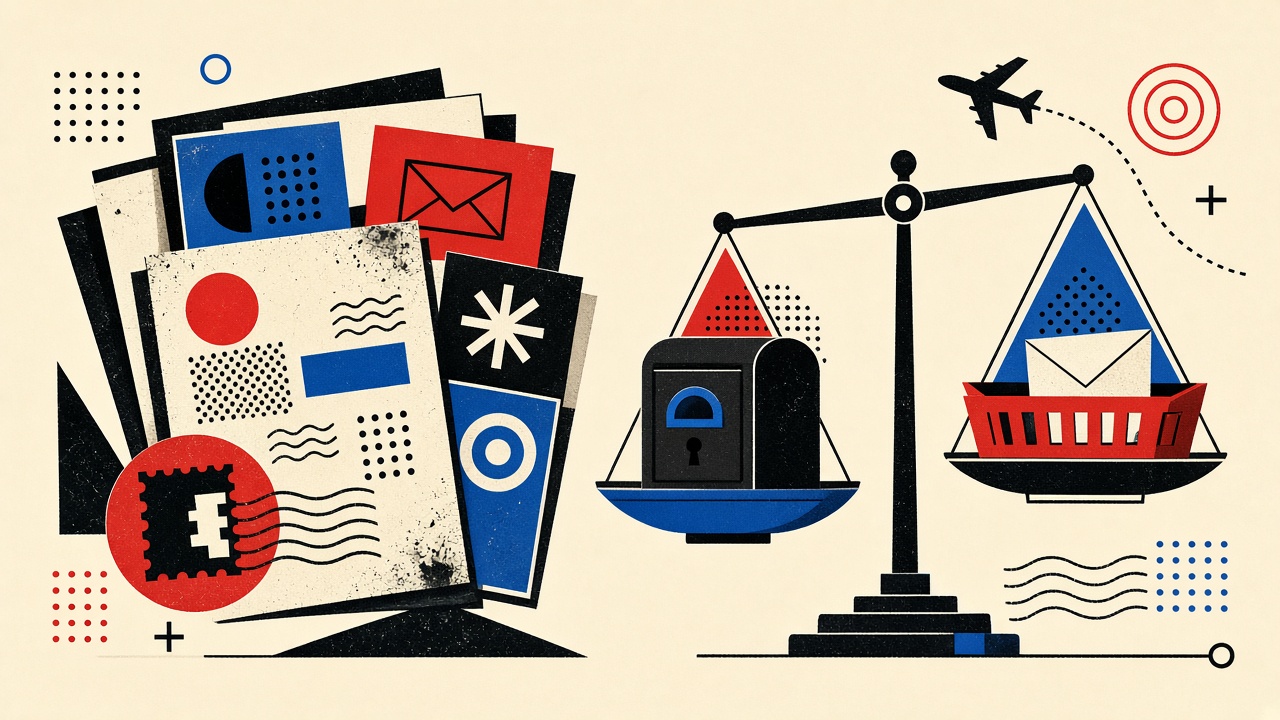
For newsletter discovery, an email alias is usually the proportionate tool: you can unsubscribe later, keep receipts of what you joined, and avoid burning your primary address. A temporary inbox wins only when the sample is truly one-shot and you accept losing access when the lease ends. If you need replies, long retention, or account recovery, pick durable identity—not disposable receive-only mail.
Comparison under email privacy tools. Product truth: Mailby Quick Inbox is receive-only—no send/forward—so it is a weak alias substitute when you must reply to a list operator.
Newsletter discovery context and boundaries
Discovery means: try three newsletters this month, keep one, drop two.
You care about:
- Separating marketing from Primary
- Knowing which list sold/shared your address
- Unsubscribing months later
- Avoiding recovery lockout if a “newsletter” was actually an account
Boundaries:
- Aliases (Plus addressing, SimpleLogin-style, or domain catch-alls) still route to a durable mailbox you control.
- Temporary mail expires—see data retention and message body after first receipt.
- Tracking still possible—pixels in community registration applies to newsletter HTML too.
Demonstration: alias vs temporary
Working alias path: news+craft@example.com → filter label. Three months later unsubscribe link still works; you identify which list leaked by unique plus-tag.
Temporary counterexample: Signed up with disposable address; liked the weekly edition; lease ended; cannot unsubscribe or prove subscription; list keeps emailing a dead address (noise for them, lost control for you).
Limitation: some lists block aliases or disposable domains. Evidence of block → use a reputable alias provider or secondary durable mailbox—not endless temp domains.
Mechanism and trade-offs
| Concern | Alias | Temporary inbox | Full primary |
|---|---|---|---|
| Available later | Yes | No (short clocks) | Yes |
| Replies | Usually yes | No on Mailby | Yes |
| Control / revoke | Disable alias | Delete inbox | Harder to isolate |
| Deliverability | Generally good | Often blocked | Best |
| Cost | Free–low | Free–paid plans | Included |
| Risk for discovery | Low–medium | High if you keep reading | High inbox clutter |
Options table
| Option | Available later? | Replies? | Control | Risk for this job |
|---|---|---|---|---|
| Primary address | Yes | Yes | Weak isolation | High clutter / correlation |
| Plus-alias on primary | Yes | Yes | Medium | Provider must support + |
| Dedicated alias service | Yes | Often | Strong revoke | Trust the alias vendor |
| Own-domain catch-all | Yes | Yes | Strongest | Ops responsibility |
| Mailby Quick Inbox | Minutes–plan | No | Delete/purge | Bad if you stay subscribed |
| Privacy Pro longer temp | Longer, not permanent | No | Plan clocks | Still not a library card |
Worked decision
- Will I read more than one issue? → Alias.
- Only checking a gated PDF once? → Temporary OK (inbox).
- Newsletter requires full account with password? → Durable (shopping recovery lesson).
- Need to email the author back? → Not Mailby temporary.
Privacy-friendly list hygiene also means using unsubscribe headers when present (RFC 8058 one-click unsubscribe) rather than only marking spam.
Short answers
What makes email alias fit newsletter discovery?
Durable separation with later unsubscribe and leak tracing.
What should I do first?
Decide if the “newsletter” is actually an account; if yes, durable only.
When is a permanent address safer?
Paid memberships, receipts, or communities with recovery.
What evidence changes the recommendation?
List blocks aliases → secondary durable mailbox; one-shot gate → temporary.
Sources, test date, limitations
- Decision guide dated 2026-09-24.
- RFC 8058 for list-unsubscribe patterns.
- Product: pricing, inbox, privacy.
- Limitation: alias ecosystem quality varies; evaluate vendor threat models.
Mapping discovery intent to tool choice
| Intent | Tool |
|---|---|
| Sample one PDF, never return | Temporary receive-only |
| Trial 3–10 lists this quarter | Alias with unique tags |
| Paid membership newsletter | Durable primary or billing alias |
| Competitive research throwaway | Temporary, expect blocks |
| Newsletter that is secretly an account | Durable only |
Most regret comes from row 1 tools used for row 3 intents.
Leak detection with unique aliases
Give each list a unique local-part. When a spam wave arrives addressed to news+craft@…, you know which operator mishandled data. Temporary addresses also unique-ify, but you lose the long-term signal once the inbox dies. Aliases keep the forensic breadcrumb.
Reply and forward requirements
Authors sometimes ask for feedback. Mailby temporary mail cannot send. Alias services that allow reply-from-alias preserve the relationship without exposing Primary. If replies matter, temporary is already disqualified—independent of retention.
How this differs from the email-privacy-tools hub
The hub compares categories. This page is a newsletter-discovery comparison with an options table and explicit Mailby receive-only limits.
Migration path when a list becomes important
- Start with alias.
- If the list offers “change email,” move to a billing-ready durable address.
- Unsubscribe the alias tag.
- Keep filters on Primary for the new address.
Starting on temporary forces a hard cut when the lease ends—often without a change-email affordance.
Cost and complexity realism for small teams
Own-domain catch-alls are powerful and easy to misconfigure (open relays, accidental exposure). Plus-addressing is enough for many individuals. Alias vendors add revoke switches at small cost. Pick the simplest durable control that meets the job; do not build mail infra for three newsletters.
Temporary mail still earns a place
Product demos that demand email to unlock a sandbox, conference Wi-Fi portals, or one-time coupon walls are proportionate temporary use cases. Open Quick Inbox, receive, finish, delete. Escalate to pricing only if the sample truly needs longer retention—and still avoid using it as a reading library.
Regulatory unsubscribe reality
Laws and mailbox providers push one-click unsubscribe. Aliases help you exercise those rights months later. Temporary inboxes often cannot. If you care about stopping mail legally, durability of the destination matters as much as the presence of a List-Unsubscribe header.
Education and workplace addresses
Do not use school or employer primary addresses for random newsletter discovery; aliases on a personal domain are cleaner. Temporary mail may be blocked on workplace networks anyway. Keep roles separated: work identity, personal durable, discovery alias, disposable trials.
Saturation and attention budgets
Tooling cannot save you from subscribing to forty lists. Budget five discovery slots. Archive or unsubscribe monthly. The best privacy tool is still saying no to the twentieth popup.
Case study: three lists, three tools
- List A (daily deals): plus-alias
deals+a@— high volume, easy filter. - List B (research digest): dedicated alias vendor — revoke if noisy.
- List C (one webinar PDF): Quick Inbox — deleted after download.
Mixing tools by intent beats one tool ideology. People who force everything through temporary mail eventually lose a list they liked; people who put everything in Primary drown.
Deliverability politics
Some publishers block known disposable domains and even aggressive alias networks. If discovery fails with “invalid email,” escalate to a durable secondary—not five more temp domains. Respect the publisher’s abuse filters; they exist because of spam signups.
Forwarding chains and privacy leakage
Aliases that forward to Primary still expose Primary to the forwarding provider. Read the alias vendor’s threat model. Own-domain forwarding to a major provider is a common middle ground. Temporary receive-only avoids forwarding entirely at the cost of longevity—appropriate only for short jobs.
Metrics for your own experiment
Run thirty days:
- Lists joined with alias vs temporary
- Successful unsubscribes later
- Blocks at signup
- Accidental important mail lost
If temporary caused any lost important mail, raise the bar for when you allow it. Personal metrics beat generic blog advice—including this one—once you have data.
Corporate discovery programs
Employees evaluating vendor newsletters should use company-approved alias patterns—not personal temporary inboxes on corporate laptops—so DLP and retention policies remain coherent. Shadow IT temp mail creates gaps security teams hate for good reason.
Appendix: one-week discovery plan
Day 1: create alias scheme.
Day 2–3: join four lists max.
Day 4: disable images; skim.
Day 5: unsubscribe two.
Day 6: keep one; filter it.
Day 7: delete any temporary trials still open.
The plan prevents unbounded signup sprawl—the actual privacy leak behind most “I get too much email” complaints.
Closing decision rule
Default to an alias for newsletter discovery. Step down to Quick Inbox only for one-shot gates with no unsubscribe future. Step up to a fully durable primary or billing address when money, identity, or recovery appears. Revisit the choice whenever a list asks you to create a password—that is no longer “just a newsletter.”
Avoiding alias sprawl
Aliases multiply. Name them with intent and date (news-craft-2026) and review quarterly. Revoke dead ones. Sprawl recreates Primary chaos with extra steps. The tool works when governance is light but real—five minutes a month beats a yearly purge panic.
Reader checklist
- Alias by default for multi-issue reading
- Unique tag per list for leak tracing
- Temporary only for one-shot gates
- Durable if password/account appears
- Quarterly revoke dead aliases
- Prefer List-Unsubscribe over spam buttons when possible
Bottom line for readers
Newsletter discovery is an attention and privacy problem. Aliases give you control over time; temporary inboxes give you a clean break after a single sample. Pick deliberately, revoke often, and never confuse a gated PDF with an account you will need after the next phone upgrade. When the sample is truly disposable, Quick Inbox is enough—then delete it.
If a publisher blocks every alias you try, that is evidence to use a durable secondary mailbox—not evidence to spray disposable domains until one slips through.
Keep Primary for people who know you; keep aliases for lists; keep temporary mail for gates you will not revisit.
Conclusion
Aliases are the default for newsletter discovery; temporary receive-only mail is for disposable samples. When temporary winning the comparison, open Quick Inbox. When you need longevity or replies, stay on durable tools—and keep Primary clean with filters, not hope.
Try it on Mailby
Open a receive-only disposable inbox when a short-lived address fits the job — session-bound, with timed purge.