
Choosing an email privacy tool
Is plus addressing right for a one-time product trial?
Plus addressing filters trial mail well but still ties to your real account—use a disposable inbox when you want separation, or a durable alias when you might convert.
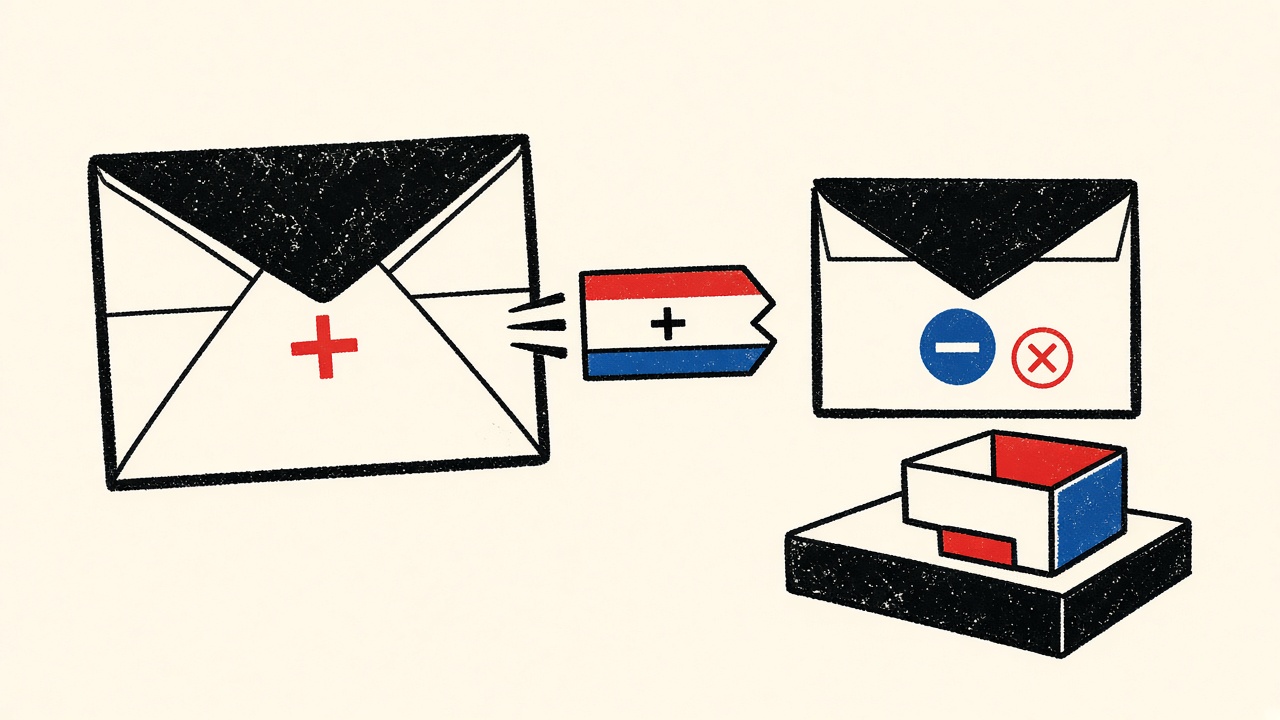
Plus addressing is right for a one-time product trial when you want lightweight filtering and might convert to a paid account on the same identity. Choose a disposable receive-only inbox when you want separation from your durable account, accept short retention, and do not need to reply. If the trial becomes real work email, upgrade to a dedicated durable alias—not your noisy primary.
This comparison weighs retention, recovery, replies, forwarding, deliverability, and cost for the trial job.
One-time product trial context
Trials usually need:
- Signup confirmation / OTP
- Onboarding tips (optional)
- Billing nags if you add a card
- Password reset if you return next week
Plus addressing (you+trialvendor@example.com) delivers into your real mailbox with a tag. Disposable Mailby addresses deliver into a session inbox that purges on a clock (data retention).
Boundaries:
- Mailby does not send or forward. You cannot reply as the disposable address.
- Some vendors strip
+tagsor reject them. - Some vendors reject disposable domains.
- Neither tool guarantees acceptance.
Field comparison
Working path — plus addressing:
- Sign up with
you+acme-trial@yourprovider.com. - Filter
acme-trialto a folder. - Convert later without changing email.
- Reset password still works years later.
Working path — disposable:
- Open Quick Inbox.
- Complete trial OTP.
- Evaluate product.
- Walk away; marketing expires with the inbox.
Failure — plus addressing: Vendor sells/shares tags poorly; your root address is still exposed to enrichment. Filter helps UX more than privacy.
Failure — disposable: You decide to buy seats on day 10; the inbox is gone; account recovery fails. Switch email before purchase if the product allows.
Mechanism trade-offs
| Concern | Plus addressing | Disposable (Mailby) | Dedicated domain alias |
|---|---|---|---|
| Available later? | Yes | Only within retention / plan | Yes |
| Replies? | Yes from same account | No | Yes |
| Control / filter | Good | Session isolation | Best |
| Deliverability risk | Low–medium (some strip +) | Medium–high (blocklists) | Low if domain healthy |
| Cost | Free with mailbox | Free tier / Privacy Pro | Domain cost |
| Risk for one-time trial | Root identity linked | Loss of recovery if you convert late | Low if planned |
Worked example
You trial a profiling SaaS for a weekend hack.
- If you expect to keep it for freelancing invoices → plus or dedicated alias from the start.
- If you only need to see the UI once and hate vendor mail → Mailby disposable.
- If the form rejects both
+and disposable → use a real secondary mailbox or domain alias.
Related decision guides: newsletter sample for solo developers and email reuse exposure.
Alternatives when durable identity wins
- Catch-all domain —
trial-acme@yourdomain.com - Privacy-oriented mailbox providers with multiple aliases
- Privacy Pro — longer receive-only retention without becoming a send mailbox
- Developer API inboxes — for testing your trial email at /developers
Permanent primary addresses are safest for payroll, banking, and app stores—not for every SaaS tire-kick.
Short answers
What makes plus addressing attractive for trials?
Same recovery path, easy filters, zero new accounts—at the cost of linking the trial to your root identity.
What should I do first?
Predict conversion. Likely convert → plus/dedicated. Pure tire-kick → disposable.
When is a permanent address safer?
When billing, compliance, or long-lived admin access is possible.
What evidence changes the recommendation?
Vendor rejects + or disposable; or you already entered payment on a disposable address—change email immediately if logged in.
Sources, test date, and limitations
Test date: 2026-09-24.
External sources:
- RFC 5233 Subaddressing — plus-style local-part conventions.
- FTC CAN-SPAM — why vendors keep whatever address you gave.
Limitations: Provider-specific plus support varies. Mailby acceptance varies by vendor. No claim of undetectable signup.
Vendor behaviors that break plus tags
- Strip everything after
+and normalize to the root address (privacy loss vs your filter plan) - Reject
+as invalid characters - Treat each plus variant as a separate account (usually fine) or collide weirdly on billing
Test the vendor’s form with a harmless plus tag before investing setup time.
Cost and cognitive load
Plus tags are free but accumulate. Disposable sessions are free/cheap but demand finishing flows fast. Domain aliases cost DNS setup and discipline. Pick the smallest tool that matches conversion probability.
Team trials
If a whole team trials software, do not share one person’s plus-address. Use a shared durable ops mailbox or per-seat invites. Disposable shared inboxes in CI belong under API isolation patterns, not human plus tags.
Migration path
Disposable → discover value → still logged in → change email to durable → then clear disposable. Skipping the middle step is how lockouts happen.
How this differs from an email-privacy-tools hub
Hub compares categories. This page answers one job: one-time product trial, with plus addressing as the default “maybe” and disposable as the separation play.
Decision tree (compact)
Will I likely pay or keep admin access?
  yes → durable alias (plus or domain)
  no  → Does the form allow disposable?
          yes → Quick Inbox
          no  → plus/secondary durable, filter aggressively
Need to reply to humans during trial?
  yes → durable (Mailby cannot send)
Need isolation from my employer primary?
  yes → domain alias or disposable, not work primary
Deliverability experiments
Keep a personal log of vendors that reject + or disposable. Patterns help future you choose faster—without building a public blocklist of shaky accuracy.
Privacy Pro as middle path
When the trial lasts several days, receive-only, and you still refuse to bind your primary address, longer retention plans may fit better than Free clocks. Confirm live entitlements on /pricing. Conversion to paid product seats still deserves a durable identity before money moves.
Psychological trap
Plus addressing feels private; it is mostly organizational. Disposable feels extreme; it is often proportionate for true one-offs. Name the goal—filter vs separate—before choosing.
Side-by-side field notes (editorial)
| Vendor type | Plus result | Disposable result |
|---|---|---|
| Indie SaaS | Usually accepts | Usually accepts |
| Enterprise SSO trial | Often requires work mail | Often rejects |
| Consumer consumer-app | Mixed; some strip + | Mixed blocklists |
| Developer tools | Usually fine | Usually fine |
Use as intuition, not gospel—always test the live form.
Reply and forward needs during trials
Sales-assisted trials need replies. Mailby cannot send. Plus addressing wins by default unless you use a dedicated mailbox with SMTP.
Cost of being wrong
Wrong toward disposable: lockout at conversion. Wrong toward plus: more vendor mail on your root identity. For high-cost SaaS, bias durable. For coupon-ware, bias disposable.
Internal linking
Samples: solo developer newsletter sample. Reuse risks: newsletter signup exposure.
Extended scenarios
Weekend design tool trial. You may buy the seat Monday. Start with plus addressing so Monday’s reset works. Filter the tag to a folder.
Five-minute API docs paywall sample. Disposable; read; clear.
Employer evaluating vendors. Use a shared durable ops mailbox, not personal plus tags that vanish when you leave.
Open-source maintainer tire-kicking SaaS. Disposable reduces spam; if you become a customer, change email before billing.
Forwarding and filters
Plus tags shine with server-side filters. Disposable shines with nonexistence after the lease. Neither replaces a password manager.
Deliverability vs privacy tension
The most private option is sometimes rejected. Have a backup durable alias ready rather than fighting the form. Fighting wastes time and can trip bot defenses.
Summary recommendation
Default for convertible trials: plus or domain alias. Default for pure tire-kicks: Quick Inbox. Default for reply-heavy sales trials: durable mailbox with SMTP. Revisit /pricing only when receive-only longevity is the missing piece—not when you need to send.
Deep dive: what “one-time” really means
Product marketers call everything a trial. Operationally, classify:
- Content sample — one PDF/HTML, done.
- Timeboxed SaaS trial — 7–14 days, possible conversion.
- Freemium forever — soft trial, hard identity.
Plus addressing fits (2) and (3). Disposable fits (1) and sometimes early (2) if you change email before day 7 billing.
Alias hygiene
Do not reuse you+trial@ across unrelated vendors—you lose filter signal. Prefer you+vendorname@.
When employers block plus tags
Some corporate gateways reject outbound or inbound plus forms. Then use a dedicated mailbox or subdomain alias.
Recap table in prose
Available later? Plus yes, disposable only inside retention. Replies? Plus yes, disposable no. Control? Domain alias best. Risk for pure one-off? Disposable lowest identity link; plus leaks root. Risk for conversion? Disposable highest lockout risk.
Choose deliberately; do not default to primary for every button that says “Start trial.”
Worked weekend timeline
Friday 8pm: Start a design SaaS trial. Unsure about buying. Use Quick Inbox; confirm OTP; poke UI for an hour; clear.
Saturday: Still curious; trial allows re-signup. This time use you+designtool@durable. Rebuild the short trial state—or request trial extension from support using durable mail.
Monday: Buy seats on the durable address. Billing and resets remain reachable.
The Friday disposable choice was correct because Saturday re-bound identity before money. Skipping Saturday is the failure.
Comparison with newsletter samples
Samples rarely need Monday billing. Trials often do. That single difference flips the default from disposable toward plus addressing. Keep both tools; match them to the job (newsletter sample guide).
Myths to drop
- “Plus addressing hides me from the vendor.” No—the root mailbox is visible to many systems.
- “Disposable is always rejected.” No—many indie tools accept it; enterprise often does not.
- “I can reply from Mailby if needed.” No—receive-only.
- “Privacy Pro turns disposable into Gmail.” No—it extends receive windows; it does not add send.
Buying checklist before entering a card
- Account email is durable.
- You can receive resets.
- You have exported any data from the disposable phase you care about.
- Filters are ready so trial mail does not drown primary.
If those fail, pause payment.
Last mile
Ask whether next week’s password reset must succeed. If yes, plus or domain alias. If the trial dies tonight and should leave no residue, open Quick Inbox.
The wrong default is using your primary address for every trial button on the internet.
Match the tool to conversion risk, not to habit.
Conclusion
Plus addressing is a filter strategy; disposable mail is a separation strategy. Pick based on whether next week’s password reset must succeed.
When separation wins, use Quick Inbox. When continuity wins, keep a durable alias and reserve disposable for true one-offs.
Try it on Mailby
Open a receive-only disposable inbox when a short-lived address fits the job — session-bound, with timed purge.