
Email privacy and tracking
Email address reuse at shopping checkout: what is exposed
Reusing one email across checkouts lets merchants and partners stitch your purchase graph; isolate low-trust shops with aliases or temporary inboxes.
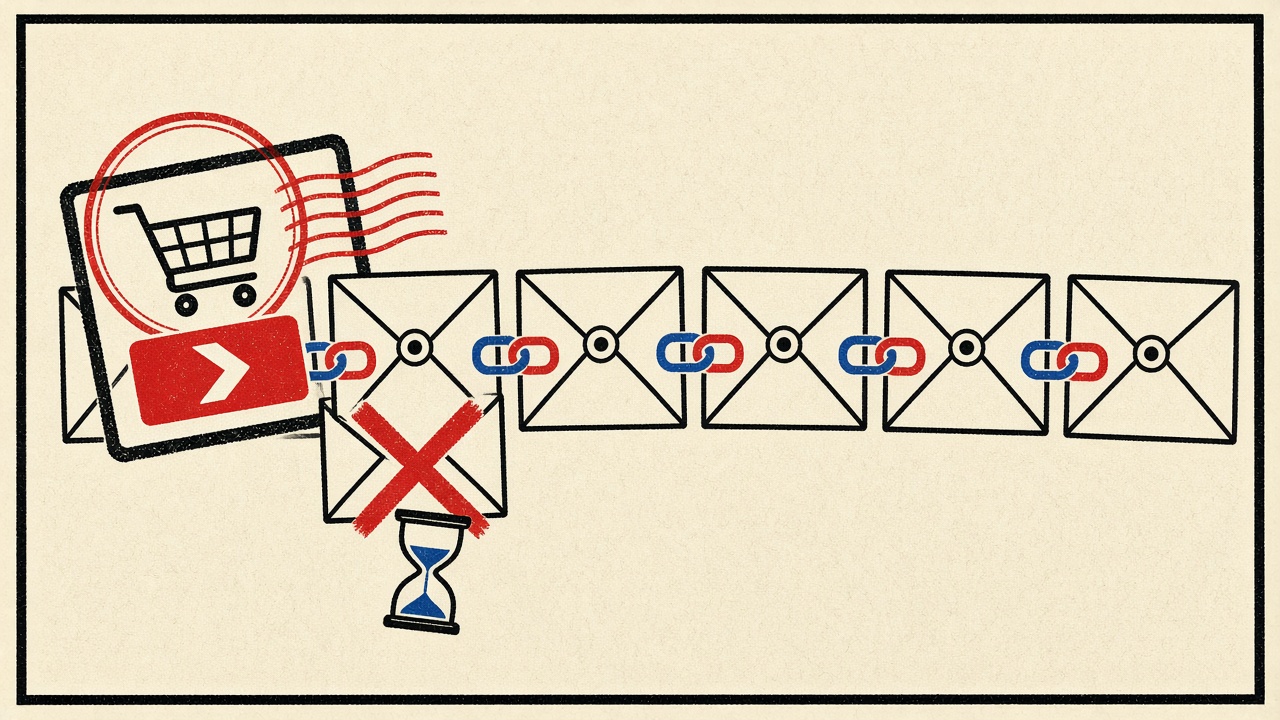
Reusing the same email at every shopping checkout is the simplest way merchants, ESPs, and data partners correlate your purchases. A temporary receive-only inbox can break that correlation for low-trust, one-shot shops—but it cannot hide payment identity, shipping addresses, or pixels on the storefront itself. For stores you will return to, prefer a durable shopping alias over both your primary inbox and a disposable lease.
Shopping checkout context
Checkout collects more than an email: tender, shipping, device signals, and often account creation. Email is the stable join key across brands that never share a database directly—list brokers and “customer data platforms” still match on address strings.
Privacy-conscious move: decide per merchant whether the join key should be primary, alias, or temporary.
Boundaries:
- Mailby does not send or forward mail; receipts that need long retention do not belong on a short lease.
- Disposable domains may be blocked at checkout.
- No guaranteed anonymity—card networks and shippers still identify you.
What reuse exposes (field framing)
| Information shared | Observer | Exposure path | Mitigation | Limit |
|---|---|---|---|---|
| Email string | Merchant + ESP | Account / guest checkout field | Alias or temp per trust tier | Payment still identifies |
| Order + email | Merchant CRM | Post-purchase sync | Separate aliases by brand | Cross-brand if you reuse alias |
| Email hash | Ad partners | Matching / suppression lists | Minimize reuse; check privacy policy | Hashing is not anonymity |
| Open/click on receipt | ESP | Tracking pixels / links | Prefer text; careful clicks | Some receipts require links |
| Support tickets | Helpdesk | Same email thread key | Durable alias for real orders | Temp mail expires mid-dispute |
Editorial check (2026-09-24)
- Working path: Guest checkout on a low-trust novelty shop using Quick Inbox; order confirmation arrived; primary inbox untouched; address can die after you save the PDF receipt locally.
- Failure / limitation: Fashion retailer rejected disposable domain; also required account for returns. Durable shopping alias was mandatory. Temporary mail could not complete a legitimate return workflow.
Mechanism: how join keys form
- You type
you@example.comat Shop A and Shop B. - Each ESP stores the address (and often a normalized lowercase form).
- Enrichment services match that string (or hash) to other datasets.
- Marketing “identity graphs” propose you are the same person who bought hiking boots and subscription snacks—even if the merchants never partnered.
Temporary addresses interrupt step 1 for merchants you do not want in the graph. They do not interrupt card BIN/shipping matches when those are shared through other channels.
Open pixels in HTML receipts still phone home when loaded. Safe preview environments reduce script risk; they do not remove the merchant’s knowledge of the address that received the mail. See /security.
Practical privacy choice (one decision tree)
- High trust + future returns → durable shopping alias (
shop@…or plus-address). - One-shot low trust + instant digital goods → temporary inbox; download receipt immediately.
- Physical shipment → durable alias (carriers and “where is my order?” mail arrive late).
- Primary personal / employer mail → never for random checkouts.
Privacy Pro (/pricing) helps when confirmation mail is delayed beyond free retention—still receive-only, still not a forever warranty archive.
Worked example
You buy a single specialty cable from an overseas marketplace:
- Create Quick Inbox session.
- Checkout as guest with that address.
- Receive confirmation; save PDF and order number in your notes app.
- Do not invent a passworded account on that address if you may dispute a charge in 30 days—use a durable alias instead if disputes are plausible.
- Let the temp inbox expire.
If the same marketplace becomes your regular supplier, migrate to a durable alias on the next order rather than “reviving” expired temp mail (you usually cannot).
Alternatives
- Browser payment autofill with separate emails per profile
- Virtual card numbers + email aliases combined
- Merchant accounts only on brands you trust
- Reading /blog/email-privacy hub for tracking-pixel deep dives
- Developer testing of your own checkout mail via /developers (authorized systems you control)
Guest checkout vs forced accounts
Guest checkout with a unique alias (or temp address) limits long-term account surfaces. Forced accounts create password recovery obligations—another reason temporary mail fails for “real” shops. If the merchant requires an account for a purchase you intend to keep, provision a durable shopping alias before payment, not after.
Receipts, tax, and warranties
PDF receipts saved to disk beat mail archives for disposable strategies. Warranties that demand the original order email thread need durable storage. For EU/UK VAT invoices or US business expenses, finance teams often require stable retrieval—temp inboxes fight your own bookkeeping.
Cross-device checkout
Starting checkout on mobile and finishing on desktop can trigger extra verification mails mid-flow. Ensure the address you used still receives for the entire flow. A lease that expires mid-3-D Secure email is an avoidable self-own.
Data broker reality check
Even with perfect email hygiene, people search, deed records, and breach corpuses may expose you. Email isolation is harm reduction for merchant graph stitching, not a cloak of invisibility. Honest privacy writing admits residual risk; it does not sell miracles.
Loyalty programs
Points accounts are long-lived identities. Using temporary mail for loyalty signup usually fails at first password reset. Either skip loyalty or use durable aliases dedicated to that program.
Worked failure: chargeback window
Day 0: buy with temp mail, download nothing.
Day 12: item missing; inbox purged; merchant support demands email verification; card chargeback needs documentation.
Cost: time, money, stress.
Mitigation: durable alias for any physical goods over a trivial amount, plus local PDF.
Related reading
Tracking-pixel behavior during shopping is adjacent but distinct—pixels observe opens; reuse observes identity joins. Read both if you are minimizing exposure systematically. Product pages: /features, /how-it-works.
Plus-addressing vs true aliases vs temporary
| Approach | Continuity | Filterability | Typical failure |
|---|---|---|---|
| Same primary everywhere | High | Low | Max correlation |
Plus-tags (user+shop@) | High | Medium | Some forms strip plus |
| Provider aliases | High | High | Alias limit / UX |
| Custom-domain catch-all | High | High | Ops burden |
| Temporary inbox | Low | High isolation | Expiry / blocklists |
Privacy-conscious shoppers often graduate from plus-tags to aliases when forms validate too strictly. Temporary mail sits at the extreme isolation end for merchants you actively distrust and will not revisit.
Browser profiles as a complement
Separate browser profiles (or containers) reduce cookie join across shops. Combine with distinct emails for layered isolation. Neither layer alone is complete; together they shrink casual tracking.
When not to use temporary mail at checkout
- Prescription or regulated goods
- High-value electronics with serial registration
- Preorders with long ship windows
- Marketplaces with dispute centering on email OTP
In those cases, continuity protects you more than merchant-graph privacy does.
Closing the loop with local archives
Whatever address you use, export or PDF the confirmation before you rely on any third-party retention story—including Mailby’s. Leases end. Disk snapshots you control do not (until you delete them).
Decision vignette: three checkouts
Checkout A — $12 novelty sticker shop, guest allowed. Temporary inbox; save PDF; done.
Checkout B — $400 appliance with warranty. Durable shopping alias; store PDF and keep mail for service bulletins.
Checkout C — grocery subscription you might cancel in two weeks. Durable alias dedicated to subscriptions; temporary mail would strand cancellation links.
Write your own vignette before the payment page loads. The email field is a policy decision disguised as a form input.
ESP preference centers and unsubscribe
Unsubscribe links prove you received mail at that address and often set cookies when opened in a full browser. For temporary addresses about to die, skipping engagement is fine—the lease ending is the unsubscribe. For durable aliases, use the preference center carefully and prefer list-unsubscribe headers when clients expose one-click unsubscribe.
Children and household purchases
Do not put a child’s personal email on merchant checkouts. Adult durable aliases (or temporary for true one-shots) keep minors out of marketing databases. This is basic hygiene, not exotic privacy tech.
International shipping and customs
Customs brokers and carriers email documents on unpredictable schedules. Temporary leases expire on the wrong day. Physical goods crossing borders → durable mail.
Synthesis
Exposure from reuse is real; exposure from lost continuity is also real. Pick the harm you are optimizing against per purchase. Mailby Quick Inbox (/inbox) optimizes isolation for short receive windows with explicit limits—not lifetime commerce identity.
Metrics you can watch personally
Without enterprise tooling you can still observe:
- How many merchants email your primary vs alias each week
- How often disposable domains are rejected
- How often you needed a receipt older than 14 days
Those personal metrics beat generic “email privacy tips.” Adjust strategy quarterly.
Merchant matching beyond email
Phone numbers, loyalty IDs, and device fingerprints also join records. Isolating email without isolating phone still leaves a strong key. For true one-shots, skip optional phone fields. For deliveries, phone may be mandatory—accept that privacy trade consciously.
Gift purchases
Shipping to someone else while emailing yourself is normal. Use a durable alias so tracking updates survive. Temporary mail that dies mid-transit creates panicked customer-support threads.
Marketplace dual roles
Buying and selling on the same platform often forces one email identity. Temporary mail fights that design. Use durable aliases and platform privacy settings instead.
Seasonal pop-up shops
Halloween or pop-up merch sites are classic temp-mail fits if goods are digital stickers or low-risk. Anything personalized and shipped needs durable mail.
Recap formula
Trust × shipment × dollar amount → address class. Low/low/low → temp. Any high → durable alias. Primary inbox reserved for banks, government, and employers.
Short answers
What causes exposure from email reuse at checkout?
Stable string matching across CRMs, ESPs, and brokers.
What should I do first?
Pick a trust tier for the merchant; choose alias vs temp accordingly; save receipts out of band.
When is a permanent address safer?
Returns, warranties, regulated goods, anything with chargebacks.
What evidence changes the recommendation?
Domain blocks, mandatory accounts, or delayed fulfillment mail beyond lease length.
Sources and limitations
- Industry identity-resolution practices are widely documented in marketing vendor materials; treat them as adversarial from a privacy standpoint.
- W3C Privacy Principles discuss data minimization themes relevant to identifiers.
- Product behavior checked 2026-09-24 against Mailby public pages. Policies change—verify /data-retention.
Conclusion
Address reuse is quiet glue for shopping identity. Break it on purpose for low-trust checkouts; keep durable aliases where continuity protects you. Temporary inboxes are a scalpel, not a cloak—use /inbox when the order’s email life is shorter than the lease, and keep receipts somewhere that outlives any disposable mailbox.
Try it on Mailby
Open a receive-only disposable inbox when a short-lived address fits the job — session-bound, with timed purge.